
Silent Auction Volunteer Tips That Make Events Run Smoother
Strong volunteer teams often make the difference between a stressful fundraiser and a smooth, profitable silent auction. Even great auction items and strong attendance can fall short if volunteers are unsure of their roles or overwhelmed during the event.
Many nonprofit organizations rely heavily on volunteers for setup, guest support, checkout, registration, item monitoring, and bidder assistance. Clear planning and thoughtful communication can help volunteers feel more confident while creating a better experience for guests.
The most successful silent auction events usually treat volunteers like part of the fundraising strategy rather than last-minute helpers. When volunteers understand the mission and feel organized, they often become stronger ambassadors for the event itself.
This guide covers practical silent auction volunteer tips that help nonprofits improve event flow, reduce confusion, support guests more effectively, and create a better fundraising atmosphere from start to finish.
Many nonprofit organizations rely heavily on volunteers for setup, guest support, checkout, registration, item monitoring, and bidder assistance. Clear planning and thoughtful communication can help volunteers feel more confident while creating a better experience for guests.
The most successful silent auction events usually treat volunteers like part of the fundraising strategy rather than last-minute helpers. When volunteers understand the mission and feel organized, they often become stronger ambassadors for the event itself.
This guide covers practical silent auction volunteer tips that help nonprofits improve event flow, reduce confusion, support guests more effectively, and create a better fundraising atmosphere from start to finish.
How Strong Volunteer Teams Improve the Guest Experience
Clear Roles Reduce Event-Day Confusion
One of the biggest challenges at nonprofit auctions is uncertainty around volunteer responsibilities. When volunteers are unclear about where to go or what they should handle, guests often notice the confusion immediately.
Successful organizations usually assign highly specific volunteer roles before the event begins. Registration support, checkout assistance, item runners, bidder support, setup crews, and floaters should all understand their responsibilities well before guests arrive.
Many schools, churches, and community nonprofits find that assigning simple written task sheets helps volunteers feel more confident while reducing repeated questions throughout the evening.
Successful organizations usually assign highly specific volunteer roles before the event begins. Registration support, checkout assistance, item runners, bidder support, setup crews, and floaters should all understand their responsibilities well before guests arrive.
Many schools, churches, and community nonprofits find that assigning simple written task sheets helps volunteers feel more confident while reducing repeated questions throughout the evening.
Friendly Volunteers Encourage More Participation
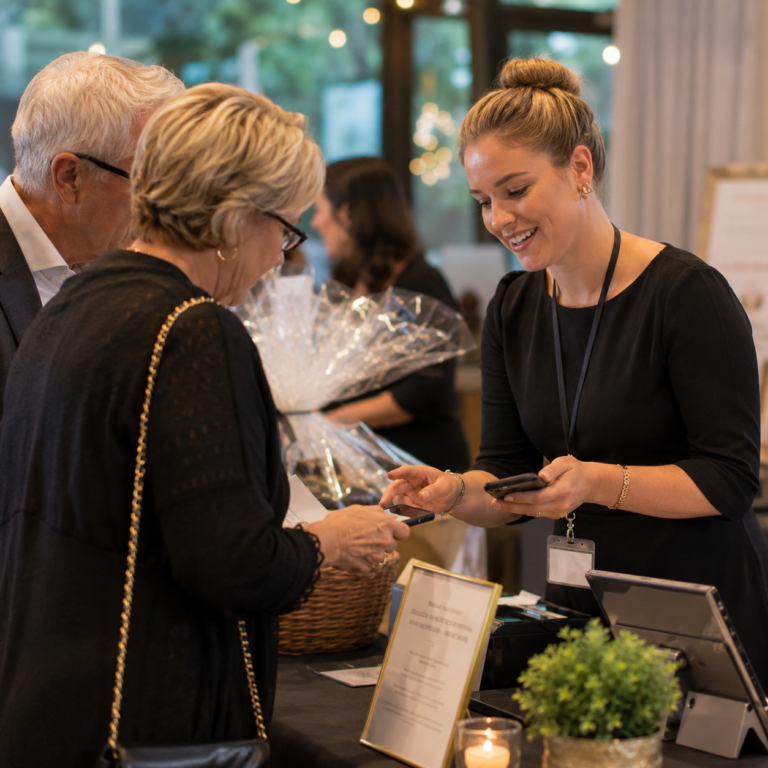
Guests are far more likely to engage with auction tables when volunteers create a welcoming and approachable environment. Friendly interactions can help attendees feel comfortable asking questions, learning mobile bidding tools, or exploring featured packages.
Volunteer teams should understand that they are helping shape the overall fundraising atmosphere. Simple actions like greeting guests warmly, assisting with bidding questions, or guiding attendees toward featured items can improve participation significantly.
At many successful nonprofit auctions, volunteers actively help guests discover packages they may have otherwise missed, which often increases bidding activity across the room.
Volunteer teams should understand that they are helping shape the overall fundraising atmosphere. Simple actions like greeting guests warmly, assisting with bidding questions, or guiding attendees toward featured items can improve participation significantly.
At many successful nonprofit auctions, volunteers actively help guests discover packages they may have otherwise missed, which often increases bidding activity across the room.
Well-Prepared Volunteers Create a More Professional Event
Even community-based fundraising events benefit from strong organization and professionalism. Guests often associate event quality with nonprofit credibility, especially when attending for the first time.
Providing volunteers with a short orientation before doors open can dramatically improve consistency. Reviewing schedules, emergency contacts, mobile bidding basics, and guest flow expectations helps volunteers stay calm during busy moments.
Many organizations also use simple branded volunteer badges or matching shirts to make volunteers easier for guests to identify throughout the event space.
Providing volunteers with a short orientation before doors open can dramatically improve consistency. Reviewing schedules, emergency contacts, mobile bidding basics, and guest flow expectations helps volunteers stay calm during busy moments.
Many organizations also use simple branded volunteer badges or matching shirts to make volunteers easier for guests to identify throughout the event space.
Volunteer Planning Before the Auction Matters More Than Most Nonprofits Expect
Early Recruitment Usually Leads to Better Volunteer Retention
Waiting until the final weeks before an event often leads to volunteer shortages and rushed preparation. Early recruitment gives organizations more time to fill important roles and confirm schedules.
Many nonprofits begin volunteer outreach several months before their auction using email lists, parent groups, church communities, corporate partners, or past supporters. Returning volunteers often become some of the most reliable event leaders.
Organizations that consistently recognize and appreciate volunteers after events frequently build stronger long-term volunteer pipelines for future fundraisers.
Many nonprofits begin volunteer outreach several months before their auction using email lists, parent groups, church communities, corporate partners, or past supporters. Returning volunteers often become some of the most reliable event leaders.
Organizations that consistently recognize and appreciate volunteers after events frequently build stronger long-term volunteer pipelines for future fundraisers.
Training Ahead of Time Prevents Last-Minute Problems
Volunteers who understand the auction process ahead of time are far more likely to stay calm during unexpected situations. Even short training sessions can improve efficiency significantly.
Some nonprofits hold brief virtual walkthroughs or distribute digital volunteer guides before the event. These resources often cover registration procedures, checkout expectations, bidder support, and troubleshooting common guest questions.
Organizations using mobile bidding platforms can also benefit from reviewing tools ahead of time through the /platforms/ section or related silent auction technology guides.
Some nonprofits hold brief virtual walkthroughs or distribute digital volunteer guides before the event. These resources often cover registration procedures, checkout expectations, bidder support, and troubleshooting common guest questions.
Organizations using mobile bidding platforms can also benefit from reviewing tools ahead of time through the /platforms/ section or related silent auction technology guides.
Assigning Team Leaders Improves Communication
Large silent auctions can become difficult to manage if every volunteer reports directly to one event organizer. Communication bottlenecks often slow down decision-making during busy periods.
Many successful fundraising events assign volunteer captains or area leads who oversee smaller teams. This structure helps volunteers receive faster support while reducing pressure on primary event organizers.
School auctions and gala fundraisers often benefit from separate leads for registration, checkout, setup, and live event coordination to keep responsibilities more manageable.
Many successful fundraising events assign volunteer captains or area leads who oversee smaller teams. This structure helps volunteers receive faster support while reducing pressure on primary event organizers.
School auctions and gala fundraisers often benefit from separate leads for registration, checkout, setup, and live event coordination to keep responsibilities more manageable.
Simple Volunteer Systems Often Lead to Better Fundraising Results
Setup Teams Should Focus on Guest Flow
Silent auction layouts directly affect bidder engagement and traffic flow. Volunteers involved in setup should understand how table placement influences the overall event experience.
Auction tables should remain easy to navigate without creating crowded bottlenecks near registration or checkout. Featured items, sponsor signage, and high-interest packages should remain visible from multiple angles throughout the room.
Many nonprofits improve bidder engagement by reviewing silent auction display recommendations and setup strategies before the event rather than improvising table placement on event day.
Auction tables should remain easy to navigate without creating crowded bottlenecks near registration or checkout. Featured items, sponsor signage, and high-interest packages should remain visible from multiple angles throughout the room.
Many nonprofits improve bidder engagement by reviewing silent auction display recommendations and setup strategies before the event rather than improvising table placement on event day.
Checkout Volunteers Help Protect the Final Experience
The checkout process often becomes the last impression guests remember after a fundraiser. Long lines or payment confusion can quickly reduce an otherwise positive experience.
Organizations that assign enough checkout volunteers usually move guests through payment and item pickup much more efficiently. Volunteers should understand payment procedures, bidder verification, and item release processes before checkout begins.
Some nonprofits also create separate pickup tables for large baskets, travel packages, or sponsor items to prevent congestion near payment stations.
Organizations that assign enough checkout volunteers usually move guests through payment and item pickup much more efficiently. Volunteers should understand payment procedures, bidder verification, and item release processes before checkout begins.
Some nonprofits also create separate pickup tables for large baskets, travel packages, or sponsor items to prevent congestion near payment stations.
Flexible Floaters Solve Problems Quickly
Even well-planned events encounter unexpected issues during the evening. Volunteers may need breaks, registration lines may grow suddenly, or technical problems may require additional support.
Flexible volunteers who can move between assignments often become some of the most valuable people at the event. Floaters help maintain momentum while preventing specific areas from becoming overwhelmed.
Many experienced fundraising teams intentionally recruit several backup volunteers specifically to handle unpredictable situations throughout the night.
Flexible volunteers who can move between assignments often become some of the most valuable people at the event. Floaters help maintain momentum while preventing specific areas from becoming overwhelmed.
Many experienced fundraising teams intentionally recruit several backup volunteers specifically to handle unpredictable situations throughout the night.
Common Silent Auction Volunteer Mistakes That Cause Problems
Giving Volunteers Too Much Information at Once
Overloading volunteers with excessive instructions right before guests arrive often creates unnecessary stress. Important details can easily get lost when too much information is delivered at once.
Successful organizations usually focus on simple, role-specific guidance instead of overwhelming volunteers with every aspect of the fundraiser. Volunteers tend to perform better when instructions feel practical and manageable.
Many nonprofits find that short printed guides or quick role checklists improve volunteer confidence far more effectively than long verbal explanations.
Successful organizations usually focus on simple, role-specific guidance instead of overwhelming volunteers with every aspect of the fundraiser. Volunteers tend to perform better when instructions feel practical and manageable.
Many nonprofits find that short printed guides or quick role checklists improve volunteer confidence far more effectively than long verbal explanations.
Assuming Volunteers Understand Mobile Bidding Automatically
Not every volunteer arrives familiar with mobile bidding systems or auction technology. Assuming everyone already understands the platform can create confusion for both volunteers and guests.
Even simple walkthroughs covering registration, bidding basics, notifications, and checkout tools can significantly improve volunteer readiness. Training becomes especially important for volunteers assisting older guests or first-time attendees.
Organizations using digital fundraising tools often benefit from reviewing platform tutorials and strategy resources before event week begins.
Even simple walkthroughs covering registration, bidding basics, notifications, and checkout tools can significantly improve volunteer readiness. Training becomes especially important for volunteers assisting older guests or first-time attendees.
Organizations using digital fundraising tools often benefit from reviewing platform tutorials and strategy resources before event week begins.
Forgetting Volunteer Appreciation After the Event
Many nonprofits focus heavily on donor appreciation while unintentionally overlooking volunteers after the fundraiser ends. This can make future recruitment more difficult over time.
Simple thank-you emails, volunteer recognition posts, handwritten notes, or small appreciation gatherings can help volunteers feel valued and connected to the mission beyond event day itself.
Organizations that consistently recognize volunteer contributions often build stronger long-term relationships and improve volunteer retention from one fundraiser to the next.
Simple thank-you emails, volunteer recognition posts, handwritten notes, or small appreciation gatherings can help volunteers feel valued and connected to the mission beyond event day itself.
Organizations that consistently recognize volunteer contributions often build stronger long-term relationships and improve volunteer retention from one fundraiser to the next.
What the Most Successful Silent Auction Volunteer Teams Usually Have in Common
The strongest nonprofit fundraising events rarely happen because of auction items alone. Behind most successful silent auctions is a volunteer team that feels organized, appreciated, and connected to the mission.
Successful organizations typically prepare volunteers well before the event instead of relying entirely on same-day instructions. Clear communication and manageable responsibilities help volunteers stay calm and confident throughout busy fundraising moments.
Experienced fundraising teams also understand that volunteers shape the guest experience in major ways. Friendly interactions, smooth registration support, and calm problem-solving often influence whether guests return for future events.
Many high-performing nonprofits create systems that make volunteering easier year after year. Returning volunteers often become trusted leaders who help train new team members and improve event consistency over time.
Perhaps most importantly, successful organizations make volunteers feel like part of the mission rather than temporary event labor. That sense of purpose often leads to stronger engagement, better fundraising energy, and more sustainable event growth.
Successful organizations typically prepare volunteers well before the event instead of relying entirely on same-day instructions. Clear communication and manageable responsibilities help volunteers stay calm and confident throughout busy fundraising moments.
Experienced fundraising teams also understand that volunteers shape the guest experience in major ways. Friendly interactions, smooth registration support, and calm problem-solving often influence whether guests return for future events.
Many high-performing nonprofits create systems that make volunteering easier year after year. Returning volunteers often become trusted leaders who help train new team members and improve event consistency over time.
Perhaps most importantly, successful organizations make volunteers feel like part of the mission rather than temporary event labor. That sense of purpose often leads to stronger engagement, better fundraising energy, and more sustainable event growth.
Common Questions About Silent Auction Volunteers
How many volunteers does a silent auction usually need?
The number depends on event size, but many nonprofit auctions require volunteers for setup, registration, bidder assistance, checkout, and cleanup. Smaller events may only need 10–15 volunteers, while larger galas may require several dozen team members.
What volunteer roles are most important at a silent auction?
Registration, checkout, and setup teams are often the most critical because they directly affect guest experience and event flow. Floaters and bidder support volunteers also help prevent bottlenecks during busy periods.
Should volunteers receive training before the event?
Yes. Even short volunteer orientations can improve organization significantly. Reviewing schedules, technology tools, guest flow, and emergency procedures ahead of time helps reduce confusion during the fundraiser.
How can nonprofits recruit better auction volunteers?
Many organizations recruit through schools, churches, businesses, parent groups, board members, and past supporters. Starting recruitment early and recognizing volunteers afterward often improves long-term retention.
Do silent auction volunteers help increase fundraising revenue?
In many cases, yes. Friendly, organized volunteers help guests feel more comfortable participating, asking questions, and bidding throughout the evening, which can improve overall fundraiser performance.
Explore More Silent Auction Resources
A successful silent auction fundraiser requires thoughtful planning, strong partnerships, and an engaging event experience.
By understanding how auctions work and what motivates bidders, organizations can create events that raise meaningful support for their mission.
By understanding how auctions work and what motivates bidders, organizations can create events that raise meaningful support for their mission.
Explore our guides to learn more about:
Step-by-step guides explaining how silent auctions work, how to plan them, and how to run a successful fundraising event.
Explore proven strategies nonprofits use to plan, promote, and maximize fundraising results from silent auction events.
Download templates and tools that help nonprofits organize auction items, track bids, and manage fundraising events.
The Association of Fundraising Professionals offers research, ethical standards, and best practices to help nonprofits improve fundraising success.