
Silent Auction Checkout Tips That Keep Events Moving
The strongest fundraising events make checkout feel organized, simple, and fast. Whether your nonprofit uses paper bid sheets or mobile bidding software, having a clear checkout strategy helps guests leave with a positive impression while reducing stress for volunteers and staff.
Many organizations focus heavily on donations, sponsorships, and promotion while underestimating how much planning goes into collecting payments, distributing items, and managing bidder communication during the final hour of the event.
This guide covers practical silent auction checkout tips nonprofits use to speed up payments, improve flow, reduce confusion, and create a smoother fundraising experience for both supporters and volunteers.
Build Your Checkout Process Before the Event Starts
Create a Dedicated Checkout Area
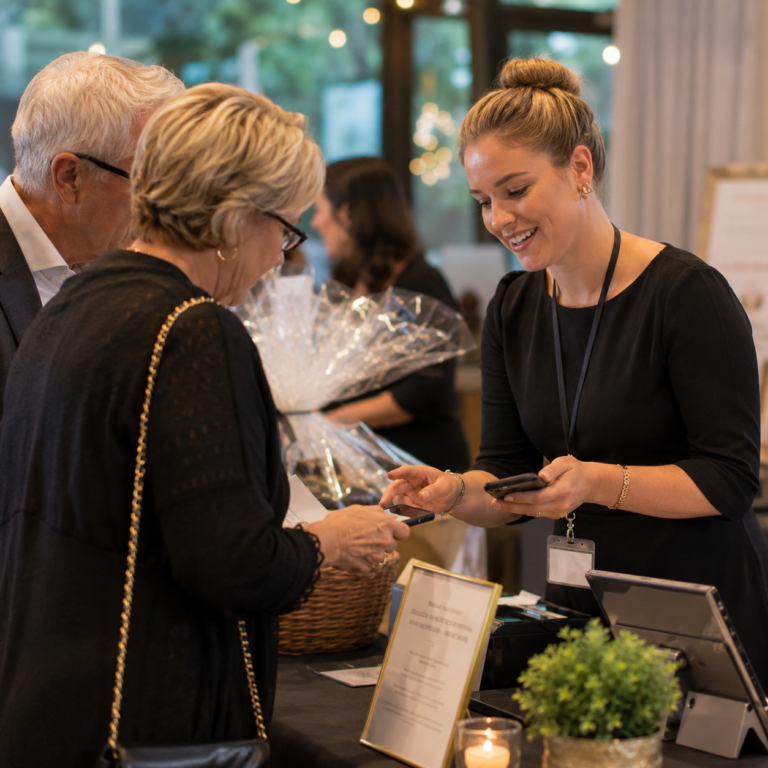
Strong fundraising events create clearly defined checkout spaces with separate stations for payments, item pickup, and volunteer assistance. Signage, directional flow, and visible staff support can dramatically reduce confusion during the busiest part of the evening.
School auctions, galas, and community fundraisers often see the smoothest results when checkout tables are positioned away from crowded auction displays and near exits. This helps guests move naturally through the process without creating bottlenecks around bidding tables.
Organize Auction Items Before Bidding Closes
Grouping items by category, table number, or bidder number helps volunteers stay organized during busy periods. Many organizations also use color-coded stickers, printed pickup sheets, or labeled storage bins to simplify item distribution during large fundraising events.
At community galas with hundreds of auction packages, volunteers often pre-stage high-value items near checkout while keeping larger packages arranged alphabetically behind pickup tables. This small operational detail can significantly improve checkout speed.
Train Volunteers on the Full Checkout Flow
Volunteer training should cover bidder verification, payment processing, item retrieval, receipt handling, and basic troubleshooting questions. Assigning volunteers to specific responsibilities also prevents confusion during peak traffic periods.
Many nonprofits hold a short pre-event walkthrough using mock checkout scenarios so volunteers can practice the flow ahead of time. This preparation often creates a noticeably calmer and more organized environment during the actual fundraiser.
Use the Right Checkout Equipment to Keep Lines Moving

Receipt Printers Create Faster Guest Pickup and Verification
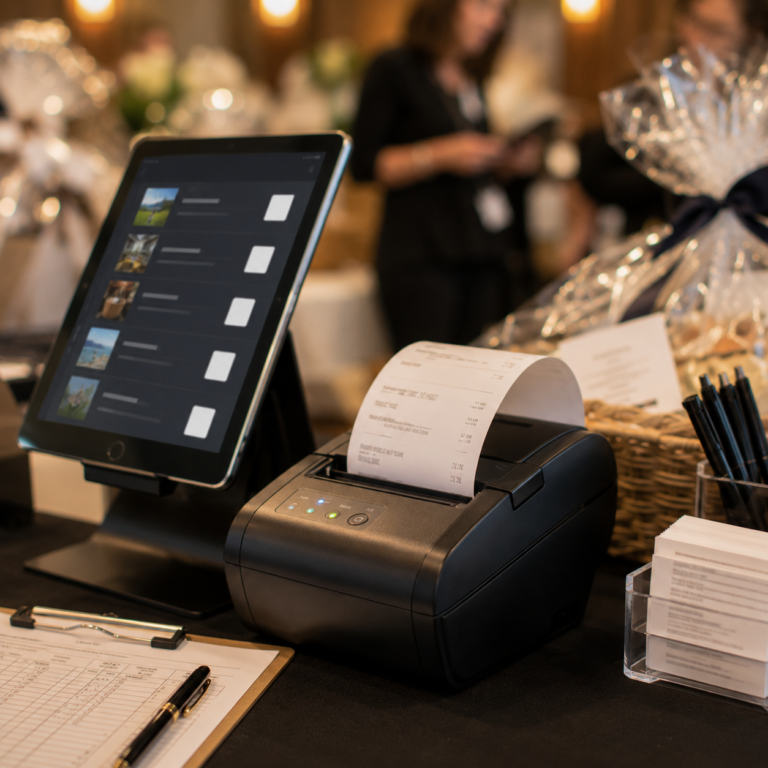
Receipt printers can dramatically improve checkout speed by giving volunteers and guests immediate transaction confirmation. Instead of manually writing payment details or searching through bidder records, volunteers can quickly print organized transaction summaries that simplify verification and reduce confusion.
Wireless receipt printers are especially helpful at larger nonprofit events where multiple checkout stations operate simultaneously. Many fundraising teams also use printed receipts to simplify item pickup by attaching them directly to baskets, certificates, or larger auction packages after payment is complete.
Label Printers Help Volunteers Stay Organized During Item Pickup
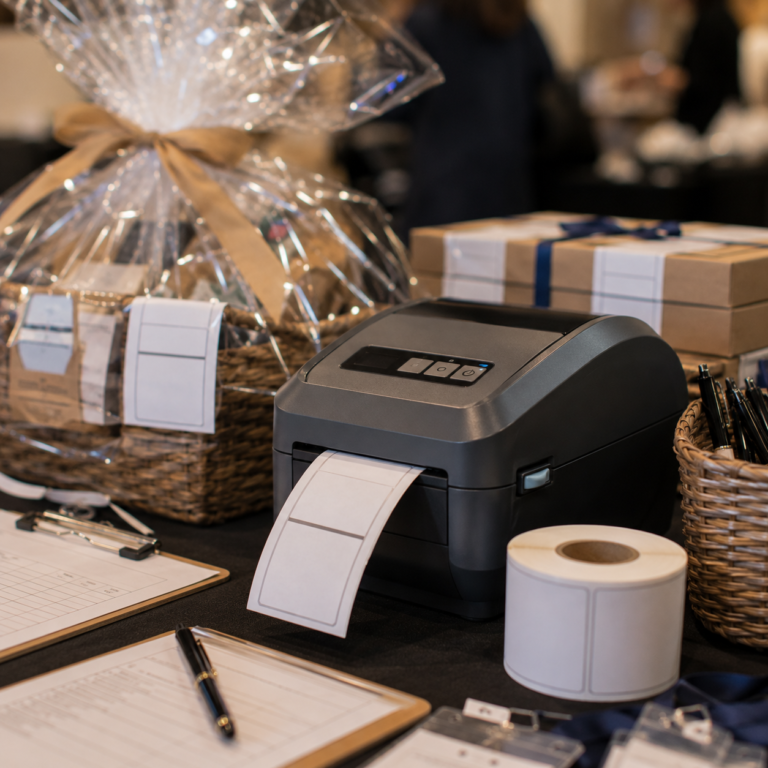
Label printers are one of the most overlooked tools for silent auction operations, but they can significantly reduce confusion during checkout and item distribution. Clear labeling helps volunteers quickly identify auction packages, bidder information, payment status, and pickup instructions during busy periods.
Nonprofits often use label printers to organize baskets by bidder number, table assignment, or category, creating a much faster retrieval process once guests arrive at pickup stations. At larger fundraising galas, labeled packages also help volunteers avoid common mistakes like handing out the wrong item or delaying checkout while searching through crowded storage areas.
Tablet Stands Help Create Faster, More Organized Checkout Stations
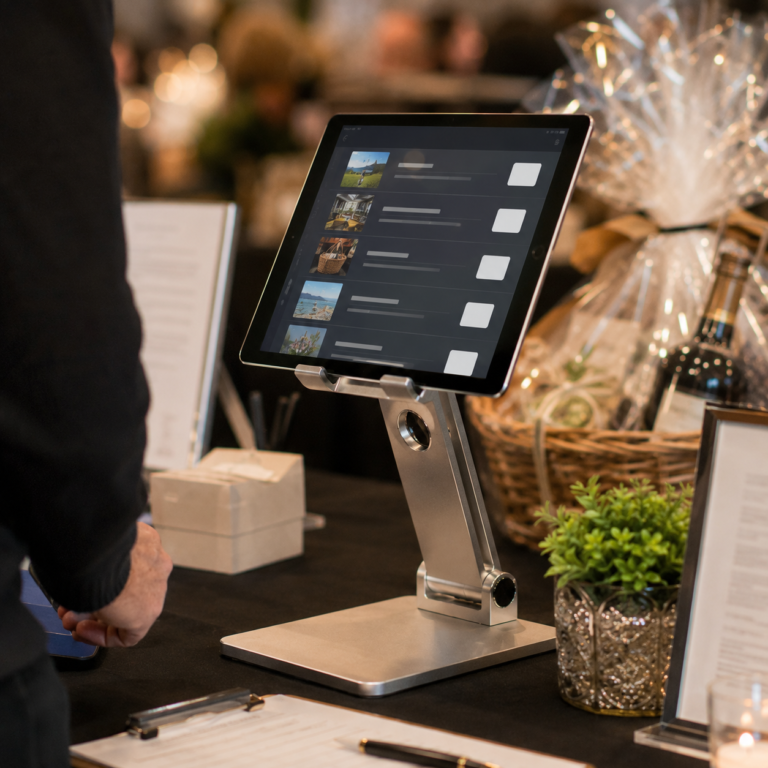
Tablet stands make mobile bidding and digital checkout significantly easier during busy fundraising events. Instead of volunteers awkwardly holding devices or laying tablets flat on tables, stands create a more professional and efficient payment experience while improving visibility for guests reviewing invoices, signing payment forms, or confirming purchases.
For silent auctions using mobile bidding platforms, tablet stands are one of the simplest upgrades that can immediately improve checkout flow while giving the event a cleaner, more polished setup. Many nonprofits use them to create dedicated self-checkout or volunteer-assisted payment stations that feel far more organized during peak traffic periods.
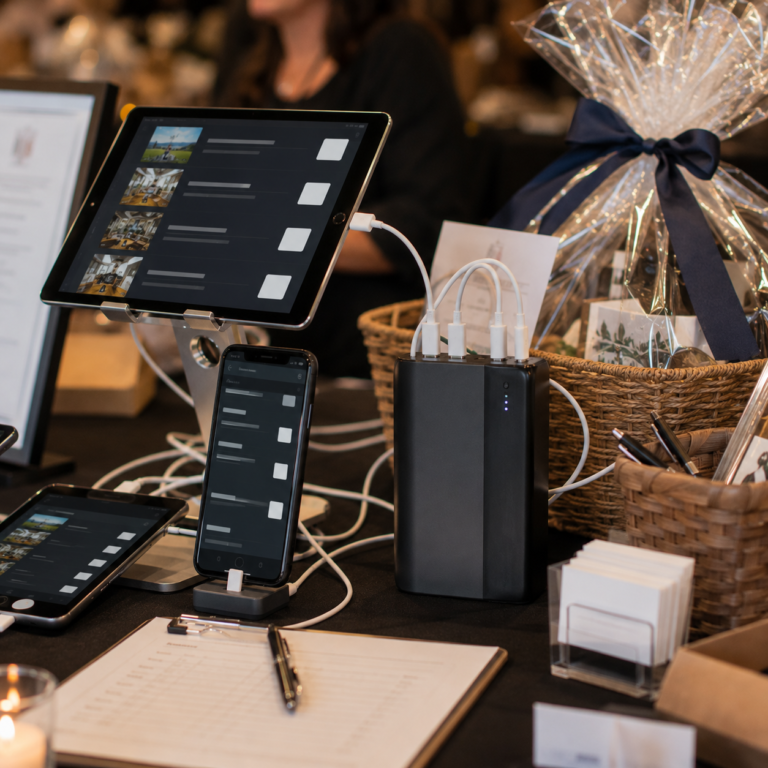
Portable Chargers Prevent Technology Problems During Checkout
One of the fastest ways for silent auction checkout to slow down is losing battery power on tablets, phones, card readers, or mobile bidding devices. Portable chargers help nonprofits avoid unexpected disruptions during the busiest part of the event, especially at venues with limited power access or large fundraising spaces where volunteers move frequently.
Many experienced event teams now treat portable chargers as essential silent auction equipment because even a single dead device can create major delays once checkout lines begin growing. High-capacity power banks help keep payment systems operational without volunteers scrambling for outlets or extension cords during checkout.
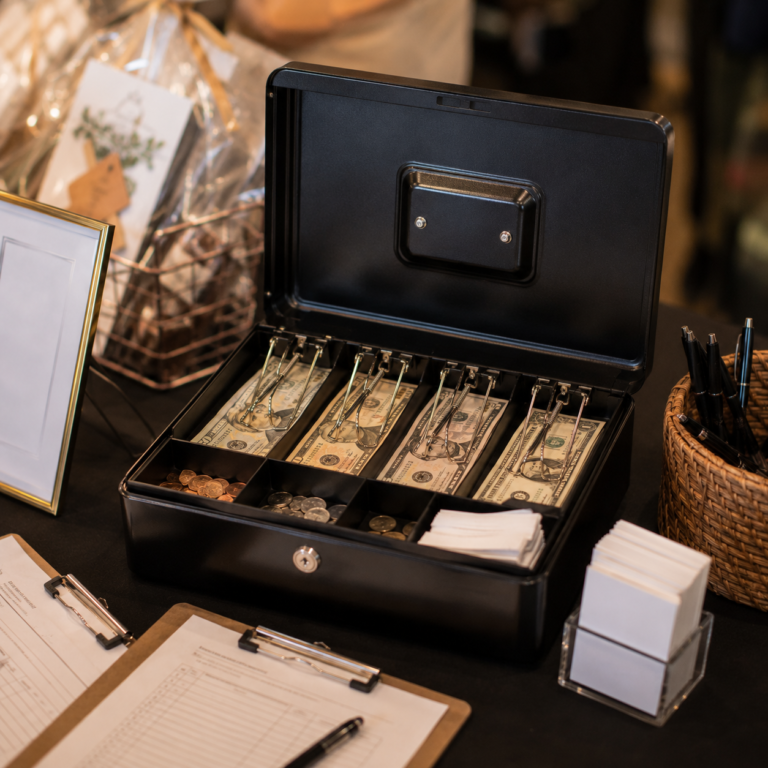
Cash Boxes Still Matter for Flexible Payment Options
Even with mobile bidding and digital payments becoming more common, many nonprofit events still process cash or check transactions during checkout. Organized cash boxes help volunteers securely manage these payments while keeping lines moving efficiently and reducing confusion around multiple payment types.
Locking cash boxes with divided compartments make it easier to organize bills, coins, receipts, and backup supplies during busy checkout periods. School fundraisers, church auctions, and community events often rely on flexible payment options because supporters may prefer different ways to donate or complete purchases.
Improve Guest Flow During Peak Checkout Times
Close Sections of the Auction Gradually
Many nonprofits divide auction tables into groups that close every 10 to 15 minutes throughout the final hour of the event. This creates a steadier checkout flow while giving staff more time to process transactions accurately.
School and community fundraisers often find that staggered closings also increase bidding activity because guests remain engaged throughout the evening instead of rushing toward checkout all at once.
Separate Payment and Item Pickup Stations
Dedicated payment tables allow guests to complete transactions quickly while separate pickup volunteers focus on retrieving baskets, certificates, and larger packages. This division of responsibilities improves efficiency and keeps lines moving consistently.
At larger nonprofit galas, organizations sometimes create express pickup lanes for guests with only one or two items, helping reduce wait times for supporters leaving early.
Keep Volunteers Visible and Available
Clearly marked volunteer shirts, signs, and designated assistance stations help attendees ask questions without interrupting payment processing. Floating volunteers can also direct traffic and solve small issues before lines grow longer.
Many successful fundraising events position volunteers throughout the room during closing time so guests receive guidance before they even reach checkout tables.
Common Silent Auction Checkout Mistakes Nonprofits Make
Waiting Too Long to Start Checkout Planning
Checkout planning should happen early in the event preparation process alongside registration, auction setup, and donor outreach. Mapping the guest experience ahead of time helps nonprofits identify potential bottlenecks before event day arrives.
Fundraisers that prioritize checkout planning early typically create smoother operations and stronger final impressions with guests and sponsors alike.
Creating Too Much Paperwork at Checkout
Reducing unnecessary paperwork and simplifying volunteer workflows can improve efficiency without sacrificing accuracy. Digital receipts, preloaded bidder profiles, and organized pickup systems often eliminate several unnecessary steps.
Many nonprofits discover that simplifying checkout procedures not only speeds up operations but also reduces volunteer stress and guest frustration during busy periods.
Underestimating End-of-Event Traffic
Preparing for peak traffic periods requires realistic staffing plans, clear station assignments, and enough space for guests to move comfortably through the process. Planning for worst-case volume often creates much smoother results.
Experienced nonprofit event teams frequently assign extra volunteers specifically for the final hour because that period usually determines how guests remember the overall fundraising experience.
What the Most Successful Silent Auction Events Usually Have in Common
Organizations with efficient checkout systems usually focus heavily on simplicity. Clear signage, organized volunteers, mobile payment preparation, and streamlined pickup procedures all contribute to a less stressful environment for both guests and staff.
Another common pattern is strong communication throughout the event. Supporters receive reminders about payment methods, auction closing times, and checkout instructions well before bidding officially ends. This reduces confusion and keeps guests informed during busy transitions.
The most organized silent auctions also treat volunteers like operational team members instead of temporary helpers. Volunteers receive clear responsibilities, training, and support so they can confidently assist guests during checkout without hesitation.
In many cases, the best fundraising events succeed because the guest experience remains positive from registration through departure. Fast checkout may seem like a small detail, but it often shapes how supporters remember the entire evening.
Common Questions About Silent Auction Checkout
How can nonprofits reduce long checkout lines at silent auctions?
Is mobile bidding better for silent auction checkout?
How many volunteers should help with auction checkout?
Should payment and item pickup happen at the same table?
What causes the biggest silent auction checkout delays?
Explore More Silent Auction Resources
By understanding how auctions work and what motivates bidders, organizations can create events that raise meaningful support for their mission.