
How to Increase Silent Auction Bids | Silent Auction Strategy Guide
Most organizations put enormous effort into sourcing auction items — and almost none into designing a bidding experience that actually drives competition. The item list gets attention. The strategy to activate bidders rarely does.
When bid activity stays flat, the damage shows up in your final revenue totals. Items close at or near their starting bid. High-value packages go uncontested. Donors leave without engaging, and the energy in the room never builds into the momentum that pushes bids higher.
This guide covers how to increase silent auction bids using practical, field-tested methods — from how you structure starting prices to how you use room layout, timing, and social signals to keep bidding active throughout the event.
When bid activity stays flat, the damage shows up in your final revenue totals. Items close at or near their starting bid. High-value packages go uncontested. Donors leave without engaging, and the energy in the room never builds into the momentum that pushes bids higher.
This guide covers how to increase silent auction bids using practical, field-tested methods — from how you structure starting prices to how you use room layout, timing, and social signals to keep bidding active throughout the event.
Why bid volume has such a big impact on silent auction results
Bidding is not a passive act — it responds to cues. When a bidder sees competition on a sheet, they’re more likely to re-engage. When a sheet looks untouched, they move on. The number of bids on any given item influences how much that item ultimately raises, often more than the item’s actual retail value.
Each additional bid does two things: it raises the floor and it signals to other attendees that the item is worth pursuing. An item with eight bids at a modest increment often outperforms a higher-value item with two bids at a larger jump. Volume creates perceived value, and perceived value drives final prices.
Getting this dynamic right is one of the highest-leverage decisions in silent auction planning. When bid activity increases across the event, total revenue follows — not just for one item, but across the entire catalog.
Each additional bid does two things: it raises the floor and it signals to other attendees that the item is worth pursuing. An item with eight bids at a modest increment often outperforms a higher-value item with two bids at a larger jump. Volume creates perceived value, and perceived value drives final prices.
Getting this dynamic right is one of the highest-leverage decisions in silent auction planning. When bid activity increases across the event, total revenue follows — not just for one item, but across the entire catalog.
How bidders actually think about silent auction bids during an event
Bidders at a silent auction are not making careful financial calculations. They’re reacting to social context, availability cues, and competitive instincts. When an item looks popular — many bids, close spacing between amounts — a bidder’s instinct is to get in before it’s too late. Scarcity and competition are powerful motivators even when the stakes are low.
Consider a dinner-for-two package with a fair market value of $150. Set the starting bid at $75 with $10 increments, and it might close at $95. Set it at $40 with $10 increments and place it near a high-traffic area with a few early bids already recorded, and it can close at $130 or higher. The item didn’t change — the bidding architecture and placement did.
For nonprofits, this psychology is an asset, not a manipulation. Donors want to participate. They want to feel the excitement of competition. Giving them a well-designed bidding environment means more people engage, more money is raised, and guests leave with a stronger connection to your cause.
Consider a dinner-for-two package with a fair market value of $150. Set the starting bid at $75 with $10 increments, and it might close at $95. Set it at $40 with $10 increments and place it near a high-traffic area with a few early bids already recorded, and it can close at $130 or higher. The item didn’t change — the bidding architecture and placement did.
For nonprofits, this psychology is an asset, not a manipulation. Donors want to participate. They want to feel the excitement of competition. Giving them a well-designed bidding environment means more people engage, more money is raised, and guests leave with a stronger connection to your cause.
How to increase silent auction bids that drive higher revenue
Set starting bids at 30–40% of fair market value
Lower entry points reduce hesitation and invite more first bids. A package that feels accessible will accumulate early bids, which in turn attract more bidders.
Use consistent, smaller bid increments on popular items
Smaller jumps — $5 to $15 depending on item value — mean more total bids before the item closes. More bids mean more engagement and a higher final price.
Place your most competitive items in high-traffic zones
High-footfall locations near the bar, entrance, or food stations give items maximum exposure. More eyes mean more bids.
Schedule a mid-event announcement about closing times
A reminder that bidding ends in 30 minutes triggers urgency. Many winning bids are placed in the final minutes when guests realize they’re about to lose an item.
Use a "bid now or lose it" visual cue near the close
A simple colored card or volunteer announcement flagging items about to close creates scarcity pressure and drives last-minute competitive bids.
Seed early bids before guests arrive
Ask board members or event volunteers to place opening bids on several items before doors open. A blank sheet is a barrier. A sheet with one or two bids is an invitation.
Group items by category to create comparison shopping
Bidders who are browsing similar items in the same area are more likely to bid on multiple. Proximity creates competition between similar items and between bidders.
What bid strategy decisions lead to more auction revenue
- Starting bids set too high discourage participation and leave items with zero bids.
- Smaller bid increments generate more total bids, which creates the appearance of competition and draws in additional bidders.
- Items placed in low-traffic corners consistently underperform regardless of their value.
- Announcing closings aloud during the event reliably triggers a final rush of competitive bids.
- Providing bid numbers instead of names protects donor privacy and removes a social barrier to competitive bidding.
- Grouping high-interest items together creates a “hot zone” where energy and engagement concentrate.
- Limiting total item count to match your audience size prevents bid activity from spreading too thin.
- Items with detailed, specific descriptions receive more bids than vague or generic listings.
- Bid sheets with clear value anchors (retail price listed) give bidders context that encourages higher bids.
Common bid activity mistakes that quietly reduce silent auction revenue
- Starting bids set too high.
When the entry price feels like a stretch, bidders skip the item entirely. An uncontested item almost always closes below its potential. - Bid increments that are too large.
A $50 jump on a $200 item means fewer total bids and a smaller pool of competitive bidders. Smaller steps produce more engagement. - No urgency mechanism.
Without a closing announcement or visual countdown, many guests assume they have more time — and leave before placing their final bid. - Blank bid sheets at opening.
An untouched sheet signals low interest to arriving guests. Pre-seeded bids remove this barrier immediately. - Poor item placement.
Burying popular items in low-traffic areas is one of the most common and costly silent auction mistakes. - Too many items for the audience size.
A rule of thumb: no more than one item per two guests. Oversaturation splits attention and flattens bid totals across the board. - Vague item descriptions.
Bidders need to understand what they’re bidding on and why it’s worth their money. Missing details suppress both interest and bid amounts. - No bid number system.
Requiring guests to write their full name discourages competitive bidding. Numbered paddles or bid IDs remove the social friction.
Practical bid-boosting tips that experienced auction organizers use
- Review every starting bid the week before your event — adjust any that feel too high.
- Pre-seed at least 50% of your items with one opening bid before doors open.
- Place your three most desirable items in the highest-traffic corridor of the venue.
- Use a bid number system so donors compete without broadcasting their names.
- Make a closing announcement at 45 minutes, 20 minutes, and 5 minutes before close.
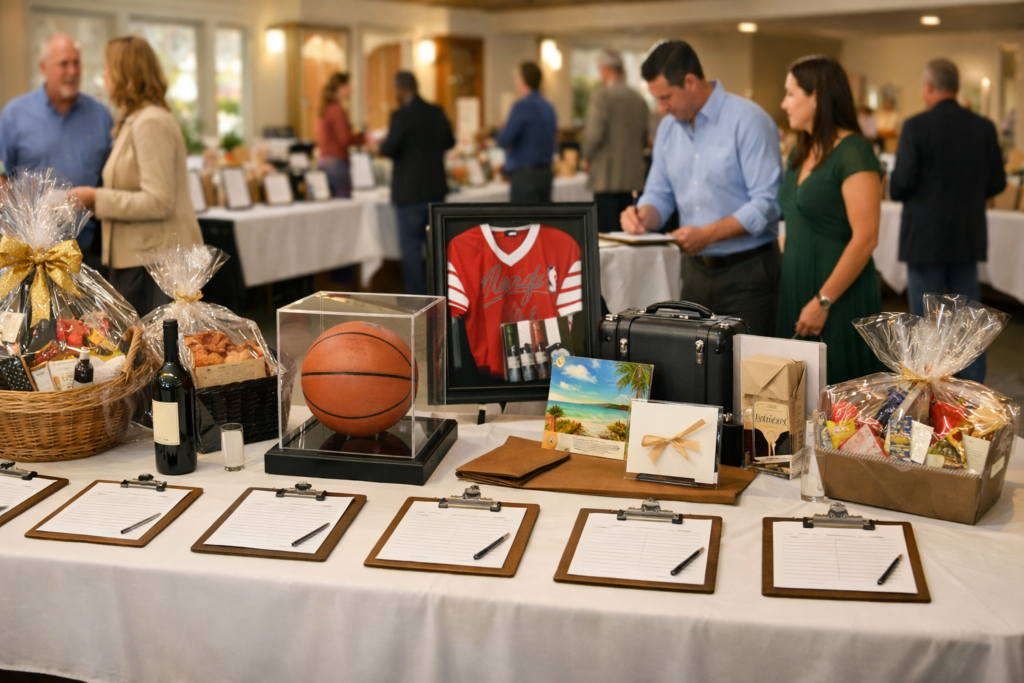
- Keep bid sheets on clipboards — flat sheets on tables get shuffled and ignored.
- Display the retail or fair market value clearly on every item description card.
- Assign a roving volunteer to watch for items with no bids and flag them for staff attention.
- Use contrasting colored markers so each new bid is visually distinct from the last.
- Limit items in any single category to three or four to concentrate bid competition.
Frequently asked questions about how to increase silent auction bids
What is the best starting bid amount for a silent auction item?
Most experienced organizers set starting bids at 30–40% of fair market value. This low entry point removes hesitation and invites early bids, which in turn attract more competitive attention. Items that start too high often receive no bids at all.
Should I use bid increments or allow any amount?
Structured bid increments are strongly recommended. They create a visible bidding ladder, make sheets easier to read, and produce more total bids than open-amount sheets. For items under $200, increments of $5–$15 are typical; for higher-value items, $25–$50 is appropriate.
How do I increase silent auction bids when the room feels slow?
A mid-event announcement highlighting contested items and remaining time is the fastest way to re-energize bid activity. Naming specific packages that are “almost won” creates urgency and sends bidders back to the tables.
Does item placement really affect how many bids an item gets?
Placement is one of the most underestimated factors in how to increase silent auction bids. Items near high-traffic areas — bar, entrance, food stations — consistently receive more bids than identical items placed in low-traffic corners.
Why do some silent auction items close with only one or two bids?
This usually signals one of three problems: the starting bid was too high, the item was poorly placed, or the description failed to communicate value. All three are fixable with pre-event review and a structured item placement strategy.
Key takeaways for improving your silent auction bid strategy
Increasing bid activity is not about luck — it’s about designing an environment where competition feels natural, entry is easy, and urgency builds throughout the event.
Key Takeaways:
Key Takeaways:
- Learning how to increase silent auction bids starts with setting starting prices low enough to invite participation, not just cover minimums.
- Bid increments directly control total bid volume — smaller steps mean more bids, more competition, and higher closing prices.
- Item placement is a strategy decision: high-traffic zones consistently produce more bids regardless of item value.
- Pre-seeded opening bids and mid-event closing announcements are two of the simplest, highest-impact tactics available to any organizer.
- Bid activity is contagious — when guests see competition on a sheet, they join it; creating visible momentum is one of the most powerful tools you have.
Explore More Silent Auction Resources
A successful silent auction fundraiser requires thoughtful planning, strong partnerships, and an engaging event experience.
By understanding how auctions work and what motivates bidders, organizations can create events that raise meaningful support for their mission.
By understanding how auctions work and what motivates bidders, organizations can create events that raise meaningful support for their mission.
Explore our guides to learn more about:
Step-by-step guides explaining how silent auctions work, how to plan them, and how to run a successful fundraising event.
Explore proven strategies nonprofits use to plan, promote, and maximize fundraising results from silent auction events.
Download templates and tools that help nonprofits organize auction items, track bids, and manage fundraising events.
The Association of Fundraising Professionals offers research, ethical standards, and best practices to help nonprofits improve fundraising success.